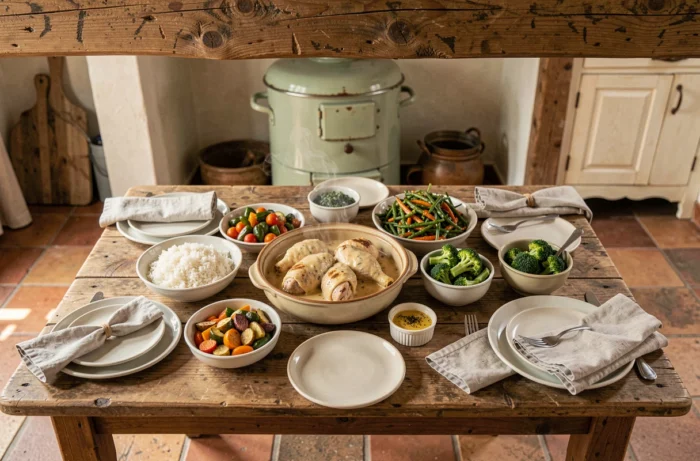
A well-prepared chicken in cream produces a sauce rich in dairy fat, with a enveloping texture and a relatively flat flavor profile. The accompaniment does not serve to “complete” the dish: it must correct it. Acidity, bitterness, crunchiness, each element on the plate compensates for an imbalance that the sauce creates by nature.
Acidic and crunchy counterpoint: the key to a balanced chicken in cream
Fresh cream, even when reduced, remains low in acidity. Without a counterpoint, the palate saturates after a few bites. We recommend building the accompaniment around a lively element rather than piling on starches.
A salad of raw endives, dressed with a lemon and shallot vinaigrette, provides both the bitterness and acidity that the sauce lacks. The crunch of the endive contrasts with the melting texture of the chicken. In winter, raw grated beetroot with a splash of cider vinegar serves exactly the same purpose.
Pickled red onions or cabbage play a role as an acidic enhancer comparable to that of a condiment. A few slices placed on the plate are enough to rekindle the appetite between bites of sauce. Slightly tart apples (like Granny Smith), diced and lightly lemoned, also work remarkably well with the cream.
The principle is simple: if your accompaniment does not bring acidity or contrasting texture, it only doubles the heaviness of the dish. You will find the advice from the site À Nos Petits Fourneaux on the balance between vegetables and starches in this type of plate.
Warm legumes as an accompaniment to chicken: texture and satiety without excess
The systematic pairing of chicken in cream and white starch (rice, pasta, potatoes) produces a monotonous plate in texture. Green lentils or chickpeas provide a chewiness that rice does not offer. Their slight resistance under the bite creates a mechanical contrast with the creamy sauce.
A warm salad of lentils with shallots and wine vinegar makes for a complete accompaniment. The cooked shallot adds sweetness, the vinegar enhances the whole, and the lentil absorbs just enough sauce to bind everything without becoming mushy.
Oven-roasted chickpeas with paprika work on another level. Their slightly crunchy crust resists the sauce and adds a dimension that classic starches do not provide. We find that this option is particularly suitable when the sauce is very liquid, as the chickpeas do not soak up like rice.
- Warm green Puy lentils: shallot vinaigrette, chives, a dash of mustard to prolong the acidity
- Roasted chickpeas: smoked paprika, cumin, olive oil, baked until they have a dry and crunchy surface
- White beans in tomato: melting, slightly tangy from the tomato, they pair well with a white wine sauce
Winter vegetables and chicken in cream: adapting the plate to the calendar
Changing the accompaniment according to the month allows for renewing the dish without altering the recipe. Competitors list generic vegetables without distinguishing their actual availability. Parsnips and sunchokes are available in mid-winter; fennel appears more at the end of the cold season; leeks are available from November to March.
Parsnips, roasted in butter with a hint of honey, develop a sweetness reminiscent of chestnuts. Paired with the chicken’s cream, it works as long as an acidic element is added alongside, or else the plate risks becoming too sweet.
Braised leeks, cut into thick pieces and slowly cooked in a chicken stock, retain a firm texture in the center and melting on the outside. Braised leeks are one of the few vegetables that absorb the sauce without falling apart. Their sweet onion flavor complements the chicken without overpowering it.
The sunchoke, peeled and sautéed with garlic, brings a nutty and artichoke-like flavor. Its slightly crunchy surface and creamy center make it a technically interesting accompaniment to vary winter meals.
Rice, pasta, or potatoes: which starch for which cream sauce
The choice of starch directly depends on the consistency of the sauce. A reduced and thick sauce requires a starch that does not become mushy. Basmati rice, drier and less sticky than round rice, remains the best vehicle for a thick sauce.
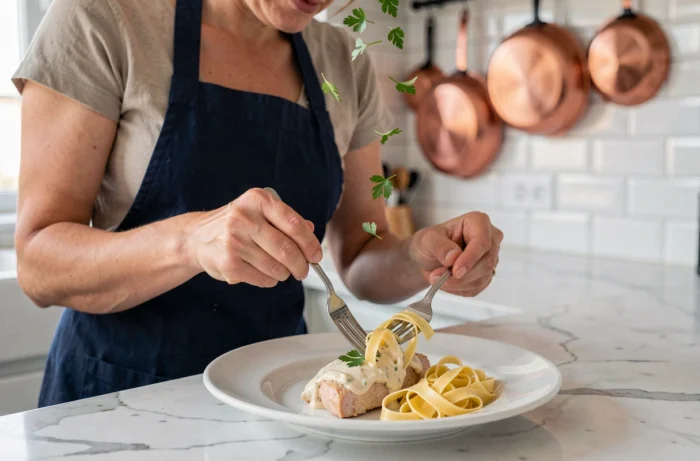
Fresh egg pasta (tagliatelle, pappardelle) works well when the sauce is fluid. Their porous surface captures the cream, and their elasticity gives body to the plate. Industrial dry pasta, smoother, slips under the sauce and produces a less satisfying result.
- Thick and reduced sauce: plain basmati rice or steamed potatoes cut in half, which do not absorb too much fat
- Fluid white wine sauce: fresh tagliatelle or sautéed gnocchi, which capture the sauce through their texture
- Mustard sauce: crushed potatoes with olive oil, whose rusticity supports the acidity of the mustard well
Gratin potatoes add an extra layer of cream. We advise against this combination unless the chicken sauce is intentionally light, with a broth base rather than pure cream.
The accompaniment of chicken in cream should be thought of as an assembly of corrections: an acidic element, a contrasting texture, a starch suited to the viscosity of the sauce. Changing just one of these parameters radically transforms the plate, even while keeping exactly the same base recipe.