Photography is now practiced on very different mediums, from smartphones to hybrid cameras, in contexts ranging from urban photo safaris to AI-assisted editing. This diversity makes learning paths difficult to compare. Which formats produce measurable progress, and which remain disguised entertainment masquerading as education?
Field photo workshops and online tutorials: two approaches compared
The chosen learning format in photography yields very different results depending on whether it relies on structured practice or on consulting online resources.
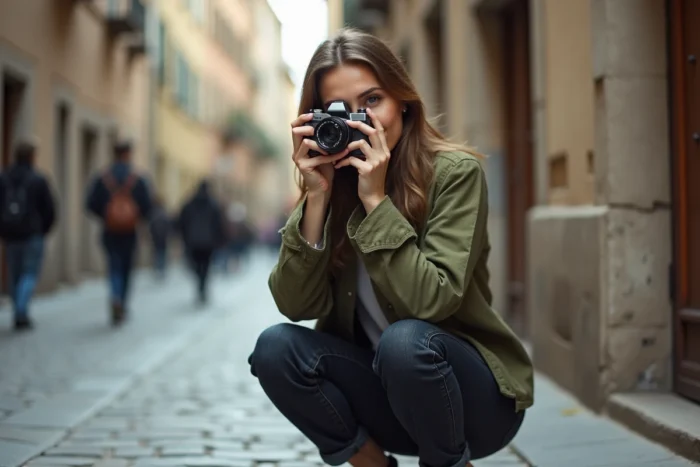
In Nice, an urban photo safari led by a local professional photographer offers personalized coaching on composition, perspectives, and the use of wide-angle lenses, directly on smartphones. This type of real-world workshop allows for real-time error correction, something a video tutorial cannot replicate.
| Criterion | Field Workshop (photo safari, training) | Online Tutorial (video, article) |
|---|---|---|
| Personalized feedback | Immediate, tailored to the level | Absent or delayed (forum, comments) |
| Practice with natural light | Real, changing conditions | Staged examples, often in studio |
| Entry cost | Higher (travel, registration) | Often free or monthly subscription |
| Progress pace | Intensive over half a day or a day | Spread out, depends on personal discipline |
| Geographical accessibility | Limited to cities offering this service | Available everywhere with a connection |
The field format suits photographers who stagnate after mastering the technical basics. The online format remains relevant for acquiring vocabulary (aperture, white balance, rule of thirds) before moving on to practice.
Exploring photography from all angles requires combining these two approaches rather than defaulting to one.
Natural light and composition: the technical gaps that change an image
The majority of beginner guides treat light and composition as two separate chapters. In practice, light determines composition even before framing. Backlighting requires a choice between silhouette or fill-in. Morning side light reshapes the volumes of a portrait or urban landscape.
Three technical parameters deserve particular attention when photographing in natural light:
- The aperture controls depth of field. A wide-open aperture (f/1.8 or f/2.8) isolates a subject from the background, while a closed aperture (f/8 or f/11) keeps sharpness across multiple planes, radically changing the reading of the image.
- The direction of light relative to the subject produces very different results: front light for even illumination, side light to reveal textures, or backlighting to create contrast and halo effects.
- Color temperature varies with time of day and weather. Photographing the same location at noon and at the end of the day yields two images with opposing atmospheres, without any editing.
Changing just one of these parameters transforms a photo more than any software filter. Photographers who progress the fastest are those who test these variables in isolation, keeping the others fixed.
Artificial intelligence and photography: what tools really change
Generative AI applied to images has sparked intense debate within the photographic community. The European regulation on artificial intelligence (AI Act) now imposes a framework for the use of these technologies, including in the field of visual creation.
For photographers, AI mainly alters the post-processing phase. Functions like generative fill or removal of unwanted elements speed up tasks that previously took several minutes per image. However, these tools do not replace the shooting work: framing, light management, timing choices.
The contractual question also arises. Companies commissioning images must frame the use of AI in their contracts with photographers, particularly to clarify what constitutes classic retouching and what is image generation. This distinction has implications for copyright and the perceived value of photographic work.
A successful shot at the time of capture requires less retouching, whether manual or AI-assisted. Investing time in mastering technical skills upfront remains more cost-effective than correcting later.
Current photographic trends: what is emerging on the ground
Several movements are emerging in recent photographic practice. Documentary photography is receiving increasing institutional support, confirming a lasting public interest in this genre.
The return to black and white and film-like renderings marks a reaction to the saturated images of social media. Young creatives are leaning towards more raw aesthetics, with grainy textures and strong contrasts.
Concert and live event photography remains a distinct field, where movement, changing artificial light, and the impossibility of reshooting impose a high level of technical mastery. It is a demanding learning ground that pushes one to work with high ISO sensitivity and fast shutter speeds.
In culinary photography, trends are evolving towards more natural staging, with visible textures and lighting that mimics window light rather than complex studio setups.
Continuing education in photography is also becoming more structured, with paths that integrate shooting technique, post-processing, and dissemination on digital platforms. Learning to photograph and learning to showcase one’s images have become two complementary skills.
These trends share a common foundation: mastery of light, the choice of a subject with meaning, and the ability to tell something with a single image. It is these technical and narrative parameters that determine the quality of a photograph, regardless of the current aesthetic movement.