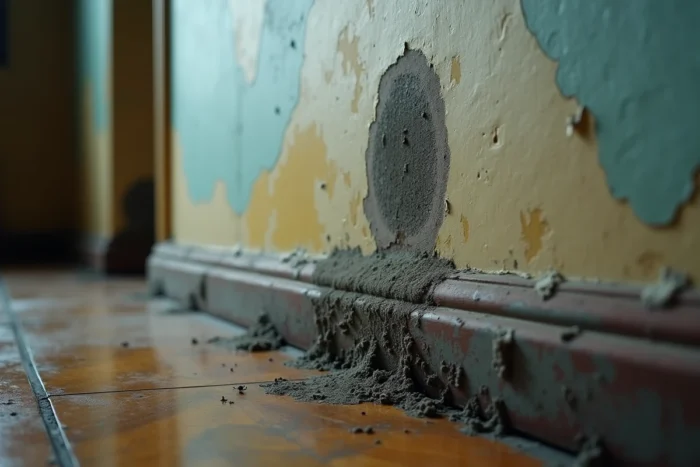
Signs of damp at the bottom of a load-bearing wall, a musty smell in the bedroom, paint bubbling under the living room window. In a co-ownership, these symptoms always raise the same question: who pays? The answer depends less on where the damage appears than on where the water comes from. This distinction, seemingly simple, generates an increasing share of disputes between co-owners, property managers, and insurers.
Thermal insulation obligation and wall humidity: the link that co-ownerships ignore
When a co-ownership undertakes facade renovation or roofing work affecting at least half of the concerned surfaces, the Building and Housing Code now requires thermal insulation work to be carried out. This obligation changes the game for buildings affected by humidity.
Why? Because facades and roofs are precisely the areas where infiltrations concentrate. When a property manager schedules a renovation to address lateral infiltrations, they must also budget for insulation. The cost of addressing humidity accumulates with that of insulation, and the final bill for co-owners rises significantly.
This mechanism of “induced” works is almost never explained in general meetings. A co-owner may vote for a simple waterproofing treatment and find themselves with a much higher call for funds, because thermal regulations are added to the initial project. Even before determining who pays for the humidity treatment, this regulatory additional cost must be integrated into the discussion. To better understand humidity diagnosis in co-ownership, this preliminary step of technical qualification remains crucial.
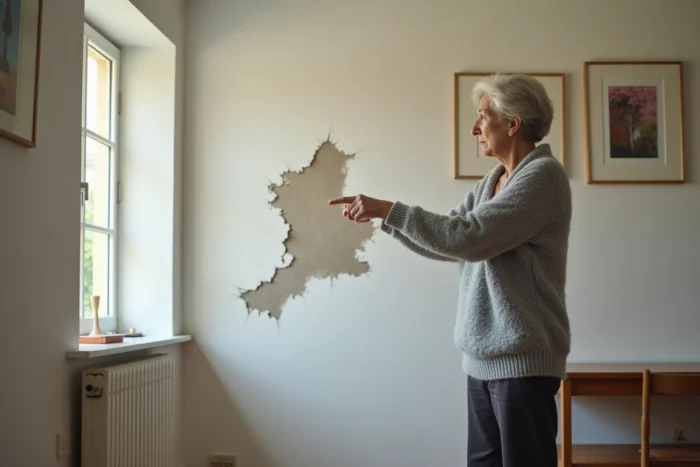
Common areas or private areas: the cause of humidity determines financial responsibility
You noticed that mold is appearing on your interior wall, but the problem may be coming from the other side? This is the whole trap. In co-ownership, it is the source of the water that designates the payer, not the location of the damage.
When the co-owners’ association takes charge of the work
If the humidity comes from a common element, the co-ownership assumes the treatment. Here are the most common cases:
- The rooftop terrace is leaking, and water is infiltrating the load-bearing walls down to the apartments on the lower floors. The property manager must schedule the repair and submit it for a vote in the general meeting.
- The facade has cracks or degraded joints that allow rainwater to pass through. The renovation (and mandatory thermal insulation) falls under common charges.
- The vertical drainage network, embedded in a load-bearing wall, causes a slow leak. The pipeline is common, even if the damage manifests in only one co-owner’s apartment.
When the co-owner pays out of pocket
If the source is located in the private lot, the charge falls to the owner of the affected housing unit. A defective shower hose, an absent bathtub seal, an individual ventilation system out of service causing condensation: these are all private causes.
The damaged interior lining remains private, even if the initial infiltration comes from the facade. In practical terms, the co-ownership finances the repair of the facade, but restoring the drywall and paint in the apartment remains the responsibility of the co-owner. This distinction fuels many conflicts.
Home insurance and humidity in co-ownership: what is covered and what is not
No insurer on the French market offers specific coverage against structural humidity. The only coverages that mention water-related damage are water damage coverage, weather events coverage, and natural disaster coverage.
Chronic humidity (rising damp, condensation, ventilation defects) is systematically excluded. For a “water damage” claim to be valid, there must be a sudden and accidental event: a pipe bursting, damage caused by the neighboring apartment, a sudden infiltration after a storm.
Another often misunderstood point: even when water damage coverage applies, the insurance only covers the consequences of the incident (painting, coverings, damaged furniture), not the repair of the cause. The leak itself, if it comes from an old common pipe, remains the responsibility of the co-ownership.
The reporting period is short. As soon as water damage is observed, the owner or tenant must report it to their insurer within the following days. Exceeding this deadline can lead to a refusal of coverage.
Increasing judicialization of humidity disputes in co-ownership
In recent years, complaints from residents against property managers and landlords for housing degraded by humidity have multiplied. Associations relay the situations of co-owners facing significant mold, persistent damp, and cracked walls, with no response from the property manager despite repeated alerts.
The inaction of the property manager in the face of a documented humidity problem engages the responsibility of the co-ownership. A co-owner who suffers damage (degradation of their lot, health issues related to mold) can sue the co-owners’ association to obtain the completion of the works and damages.
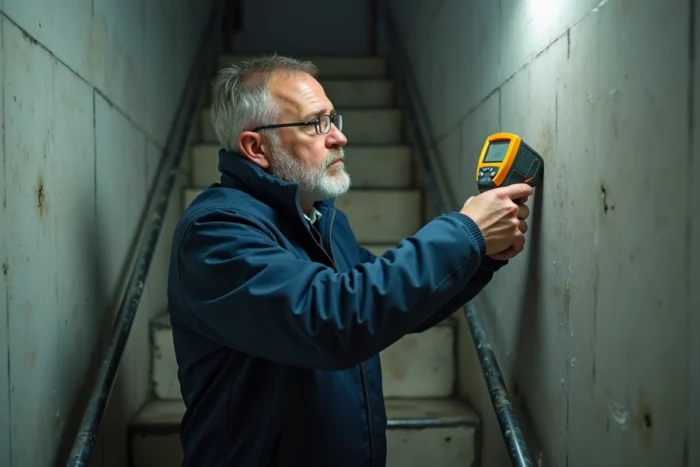
The media coverage of these cases pushes some property managers to react more quickly. In practice, the most effective pressure remains to have the humidity documented by an independent assessor, then to place the issue on the agenda of the general meeting with a supporting technical report. An isolated co-owner who merely reports the problem by letter rarely achieves a favorable outcome.
Tenant facing humidity: landlord’s responsibility and possible recourse
A tenant is not required to finance the treatment of structural humidity. The landlord is obliged to provide decent housing, free from health risks. If mold develops due to a waterproofing defect or a problem in the common areas, the tenant must report the issue in writing to the landlord, who must then turn to the property manager if the cause is common.
On the other hand, a tenant who does not ventilate their housing (windows never opened, blocked ventilation ducts) and causes condensation assumes responsibility for the damage related to this lack of maintenance. The boundary between the two situations is not always clear, which explains the frequency of disagreements between tenants and landlords on this subject.
The technical diagnosis remains the only reliable means of resolving the issue. A report that identifies the exact cause of the humidity (infiltration, rising damp, condensation) allows for an unambiguous determination of who should bear the treatment costs, whether it be the co-ownership, the owner of the lot, or the tenant.