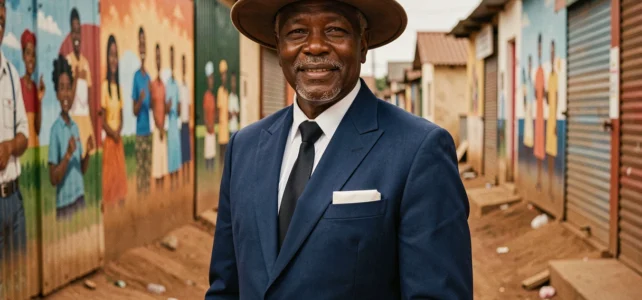
Papa Wemba died on stage on April 24, 2016, in Abidjan, in the middle of a concert, victim of a heart attack. This sudden disappearance froze an image: that of an artist who never left the stage, literally. But beyond the symbol, Papa Wemba structured Congolese music over more than four decades, from Kinshasa to European festivals, through collaborations that opened rumba to a global audience.
The Matonge neighborhood and the sound factory of Papa Wemba
One cannot speak of Papa Wemba without mentioning Matonge, the neighborhood in Kinshasa where he established his village Molokaï. It was not just a simple place of residence. It was a musical laboratory where young musicians came to train, rehearse, and try their luck.
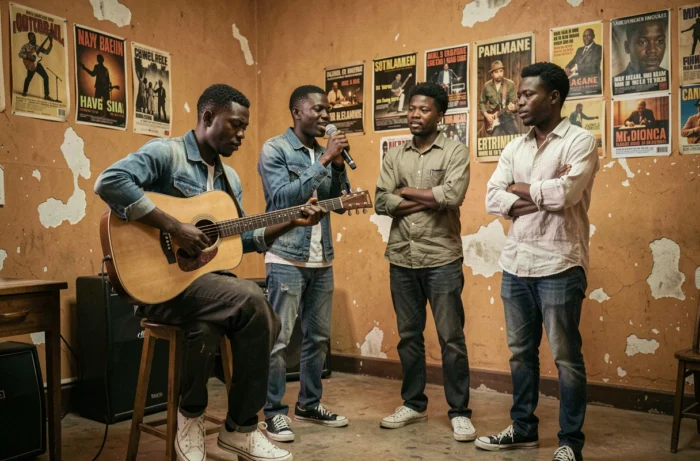
The group Viva La Musica, founded in the late 1970s, operated like a school. There, one learned the rigor of stage performance, vocal arrangement, and group discipline. Several artists who have marked the Congolese scene passed through this training before launching their own projects.
What distinguished Papa Wemba’s approach was the blend. He started from classic Congolese rumba, adding soul, rock influences, and even traditional sounds from Kasaï. To better understand the extent of his repertoire and projects, one can consult the page https://www.papawemba.fr/ which gathers resources about his artistic journey.
Congolese rumba and UNESCO recognition: what Papa Wemba prepared
Congolese rumba was inscribed on the UNESCO list of intangible cultural heritage in 2021. Papa Wemba did not live to see this official recognition, but his work made this inscription possible.
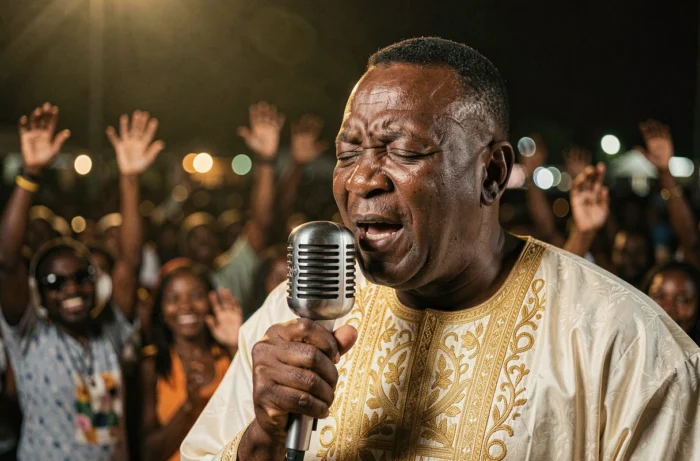
For decades, he carried this musical genre outside of Congo, onto international stages where rumba had no visibility. His albums recorded in Paris in the 1980s and 1990s allowed a European audience to discover a repertoire that, until then, circulated mainly in Central Africa and the diaspora.
The Congolese rumba as practiced by Papa Wemba was not a fixed genre. He constantly evolved it, integrating electric guitars, brass, and denser arrangements. This ability to modernize without distorting remains one of his most concrete contributions to the genre.
A living but fragile genre
Reactions vary regarding the current state of rumba in Kinshasa. Some musicians believe that the genre is losing ground to other popular styles. Others point to a resurgence of interest driven precisely by the UNESCO recognition and the regular tributes paid to Papa Wemba.
Papa Wemba, king of SAPE: much more than a question of costume
SAPE (Société des Ambianceurs et des Personnes Élégantes) existed before Papa Wemba, but he transformed it into a cultural movement visible internationally. By wearing European designers on stage and claiming fashion elegance as an identity act, he gave the movement a dimension that the circles of Brazzaville and Kinshasa alone would not have been able to propagate.
This link between music and fashion was not cosmetic. For Papa Wemba, the way to present oneself on stage was an integral part of the artistic performance. Outfits were chosen with as much care as the setlists.
In August 2026, SAPE was highlighted during the sixth edition of Kinshasa Fashion Week, confirming that this cultural movement remains active and continues to evolve beyond the figure of Papa Wemba. Today, communities of sapeurs can be found in several African and European countries, who consistently cite Papa Wemba as a founding reference.
Rumba Museum in Kinshasa: the institutional legacy of Papa Wemba
Since April 24, 2022, Papa Wemba’s former residence in the Ma Campagne neighborhood of Kinshasa has become the museum of Congolese rumba. The Congolese state purchased the house to create a place of memory and valorization of musical heritage.
In May 2024, the management of the museum was entrusted to anthropologist-musicologist Franklin Mubwabu, appointed national director. This choice marks a desire to structure the memory of Papa Wemba within an official heritage policy, and not just in occasional commemorations.
What the museum concretely changes
Before this initiative, Papa Wemba’s legacy relied on scattered archives, sometimes poorly preserved recordings, and the oral memory of musicians who had worked with him. The museum offers a physical framework to:
- Preserve stage costumes, instruments, and personal documents related to his career and the history of Viva La Musica
- Host researchers and musicologists working on Congolese rumba and its ramifications in contemporary African music
- Provide a tourist anchor point in a Kinshasa neighborhood already associated with the musical history of Congo
This museum is also a direct extension of the UNESCO inscription of 2021. Rumba now has a dedicated physical space for its transmission, which did not exist during Papa Wemba’s lifetime.
Influence of Papa Wemba on current Congolese artists
When asked to name their dream orchestra, Congolese musicians frequently mention Papa Wemba. Fally Ipupa, for example, cited him alongside Koffi Olomidé, Madilu System, and King Kester Emeneya in his ideal lineup.
This influence is not limited to a nominal tribute. The Viva La Musica model defined a training standard for Congolese musicians: going through a large orchestra, learning the craft, and then becoming independent. This pattern remains the dominant trajectory for artists on the Kinshasa scene.
Papa Wemba also opened a path for international collaborations. His work with Peter Gabriel and his presence on the Real World Records label in the 1990s showed that a Congolese artist could access world music circuits without renouncing his repertoire. This door, once opened, has never been closed.
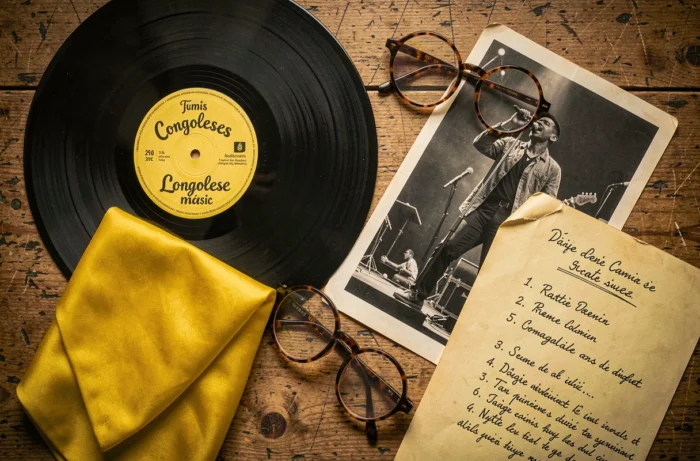
The music of Papa Wemba continues to circulate, carried by reissues, concert tributes, and a museum that anchors his memory in the cultural landscape of Kinshasa. What remains, at its core, is a model of a complete artist: singer, trainer, fashion icon, cultural ambassador, whose impact is measured less in statistics than in generations of musicians he made possible.