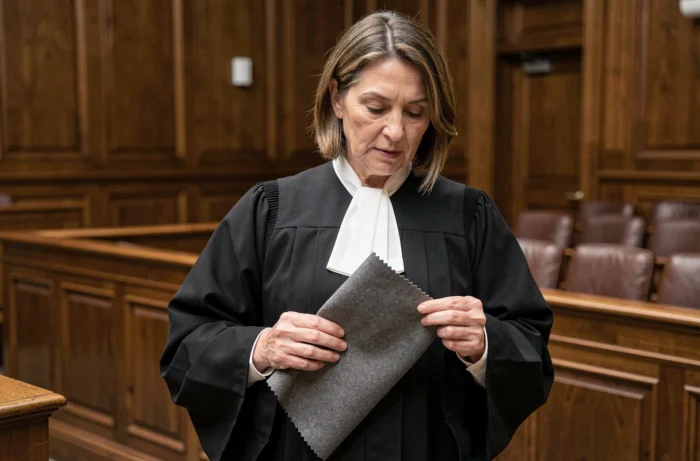
The fabric of a barrister’s robe determines its longevity, daily comfort, and compliance with bar association standards. Between traditional wool, synthetic microfibers, and recent blends, performance differences are measurable across several concrete criteria. Comparing these fabrics through their technical properties allows for an informed choice, tailored to the frequency of wear and maintenance constraints.
Wool, microfiber, and blend: comparative table of technical properties
Three main families of fabrics dominate the making of barrister’s robes. Their characteristics differ in terms of drape, durability, and maintenance.
| Criterion | 100% Wool | Polyester Microfiber | Wool-Polyester Blend |
|---|---|---|---|
| Drape and fall | Fluid, natural, pronounced pleats | Stiffer, lightweight | Intermediate, good hold |
| Breathability | High (natural fiber) | Medium to low | Acceptable depending on the ratio |
| Wear resistance | Good if maintained | Very good | Very good |
| Maintenance | Specialized dry cleaning | Machine washable (low temperature) | Dry cleaning recommended |
| Sensitivity to session creases | Naturally smooths out | Low creaseability | Variable |
| Indicative cost | Highest | Most accessible | Intermediate |
Wool offers the best drape, which creates the characteristic pleats of the black robe. On the other hand, microfiber is more resistant to repeated friction and greatly simplifies maintenance. The blend attempts to reconcile the two, with results that heavily depend on the proportion of each fiber.
To choose the fabric for a barrister’s robe, one must cross-reference this data with the actual frequency of wear and the type of jurisdiction frequented.
Maintenance constraints and durability of black fabric
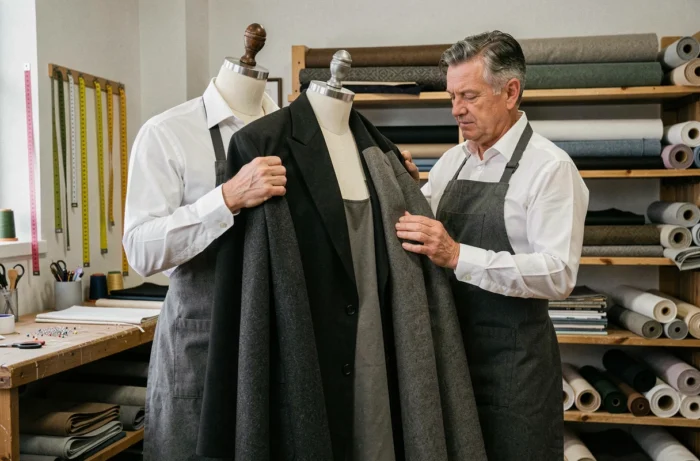
Cleaning conditions the lifespan of the robe as much as the initial quality of the fabric. Wool and certain microfibers do not withstand the same treatments. Specialized dry cleaning is recommended to preserve the pleats, shape, and finishes of wool robes.
An elegant but difficult-to-maintain fabric loses its shape within a few months of regular wear. For a barrister who pleads several times a week, this constraint weighs on the annual maintenance budget and the overall appearance of the garment.
Wool: the drape comes at a maintenance cost
Black wool retains its deep, matte appearance longer than synthetics, provided a regular dry cleaning cycle is followed. Ironing should be done at low temperature, with a damp cloth, to avoid shining the fiber.
The pleats of the robe, often sewn and then heat-fixed, deform under the effect of inappropriate washing. Restoring these pleats represents an additional cost at a specialized tailor.
Microfiber: practicality for everyday use
Robes made from polyester microfiber tolerate machine washing at low temperatures. The fabric dries quickly, hardly wrinkles, and retains its shape without special ironing. Microfiber is suitable for barristers who wear their robe daily and seek minimal maintenance.
In contrast, the visual rendering lags behind that of wool. The black appears slightly shinier, and the drape lacks the flexibility that gives traditional robes their characteristic look.
Bar association regulations and fabric compliance for barrister’s robes
The black robe, white collar, and, in certain solemn circumstances, the cap are subject to rules and customs that vary according to bar associations and jurisdictions. The choice of fabric must be validated with the local internal regulations, not solely based on aesthetics or comfort.
Some bar associations allow flexibility regarding the material while requiring a deep, matte black. Checking these requirements before production avoids costly non-compliance.
- Consult the internal regulations of the bar association for any restrictions on the material or finish of the fabric
- Check if the main jurisdiction imposes specific standards during solemn hearings (attire, accessories, exact color)
- Ask the tailor if the chosen fabric has already been validated by other barristers from the same bar association
Textile traceability and European regulation ESPR: what changes for custom tailoring
The European regulation ESPR (EU 2024/1781), which came into effect on July 18, 2024, provides for a digital passport for products. Textiles and clothing are included in the European work plan 2025-2030, with a delegated act announced for 2027.
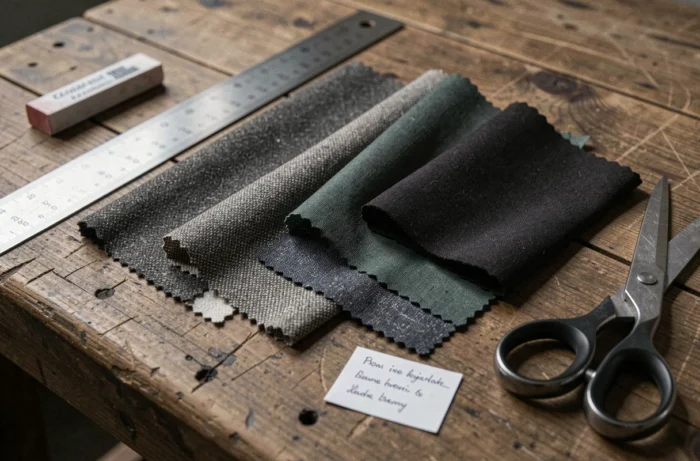
For a custom-made robe, this regulatory evolution means that the traceability of the fiber and fabric will become a verifiable criterion. Choosing a supplier capable of documenting the origin of their raw materials now prepares for this obligation.
Even though the barrister’s robe falls within a niche market, costume artisans will have to comply with the same rules as the rest of the textile sector.
- Request from the supplier a certificate of origin for the fiber (traceable wool or recycled polyester)
- Ensure that the tailor anticipates future obligations of the product digital passport
- Prefer workshops that document their supply chain, even in a simplified manner
The fabric of a barrister’s robe is chosen at the intersection of three requirements: the expected visual drape by the profession, resistance to intensive use, and compliance with bar association rules. The traceability of raw materials, driven by the European regulatory framework, now adds a fourth criterion to be integrated from the order stage.