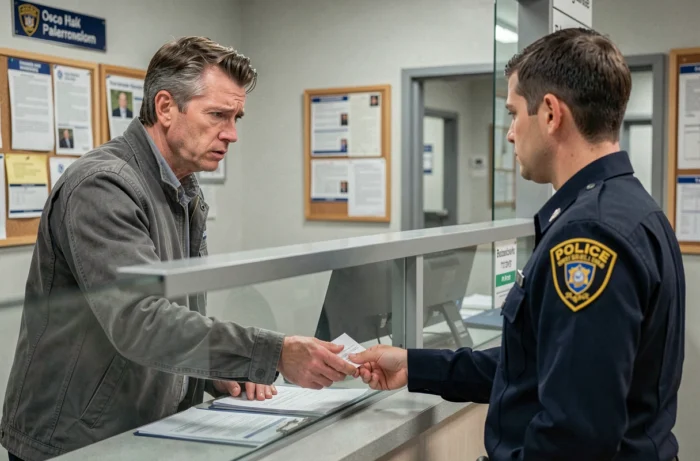
After a theft, the first question rarely concerns the procedure itself, but rather what happens if one is late or if one makes a mistake in the process. The theft report conditions compensation by the insurer, the blocking of identity documents, and the admissibility of any legal action. Understanding the differences between the available channels, their timelines, and their limitations helps avoid administrative blockages that often arise several weeks after the incident.
Online pre-complaint, police station, gendarmerie: comparison of reporting channels
There are three main ways to report a theft to the authorities today. Their characteristics differ in terms of processing time, immediate legal value, and types of theft covered.
| Channel | Availability | Immediate legal value | In-person visit required | Types of theft covered |
|---|---|---|---|---|
| Online pre-complaint (masecurite.interieur.gouv.fr) | 24/7 | No (simple pre-registration) | Yes, appointment at the police station or gendarmerie for signature | Property crimes with an unknown perpetrator |
| Police station | Opening hours, sometimes by appointment | Yes, upon signing the report | Yes | All types of thefts |
| Gendarmerie brigade | Opening hours, telephone availability | Yes, upon signing the report | Yes | All types of thefts |
The online pre-complaint does not constitute a formal complaint. It speeds up the process at the police station or gendarmerie by pre-filling the information, but only the signature on-site legally validates the complaint. Some police stations, particularly in Vaucluse, now offer an appointment system to reduce waiting times when filing.
To fully understand each step before going in person, it is useful to know how to file a theft report in advance to prepare the necessary documents.

Obligation to register the complaint: what Article 15-3 of the Code of Criminal Procedure says
A little-known point still generates problematic situations at the counter. Article 15-3 of the Code of Criminal Procedure requires police and gendarmerie services to register any complaint, including for thefts and burglaries. Refusing to register a complaint exposes the officer to disciplinary sanctions.
This provision aims to correct an old practice: some victims were directed to a simple incident report or even invited to contact their insurer directly. The incident report does not have the same legal weight. It records an event without triggering an investigation and does not allow for obtaining a report usable by the insurer.
What to do in case of refusal at the counter
If an officer refuses to register your complaint, you can send a letter to the public prosecutor of the competent judicial court. The complaint will then be registered by the prosecution. Keep the name of the officer and the time of refusal to support your action.
Underreporting of thefts: concrete consequences for victims
Criminological estimates indicate that only 60 to 70% of burglaries are reported to law enforcement. A significant proportion of victims do not take any formal steps.
The consequences of this underreporting are direct:
- Inability to obtain compensation from home insurance, which systematically requires a receipt of the complaint filed within two business days after the discovery of the theft
- Absence of a usable judicial record if the goods are later recovered or if the perpetrator is apprehended for other offenses
- Inability to block stolen identity documents, exposing the victim to identity theft
The Ministry of the Interior acknowledges that its statistics do not reflect all offenses, precisely because not all victims file complaints.

Reporting theft of identity documents: digital national identity card and ANTS procedure
The theft of identity documents requires a precise sequence. The filing of a complaint must precede any request for renewal on the ANTS (National Agency for Secure Documents) website. Without the report number, the request for a new document will be blocked.
Since the widespread adoption of the France Identité application, the digital identity card is accepted for boarding at French airports. This development changes the situation in the event of theft of the physical card: if the digital version is already activated on the phone, the traveler retains a valid form of identification for domestic flights during the replacement period of the physical document.
Recommended sequence after theft of documents
- File a complaint at the police station or gendarmerie and obtain the receipt with the report number
- Block the bank card if it was among the stolen documents (call the interbank server or the bank)
- Initiate the request for renewal of the identity card and, if applicable, the passport on the ANTS website by providing the report number
- Notify the insurer by registered mail within the contractual deadline, usually two business days
For the driver’s license, the theft report follows the same process. The request for a duplicate then goes through the ANTS website with the complaint receipt.
Deadline for reporting to the insurer: why two days change everything
Most home or auto insurance contracts set a two business day deadline for reporting a claim after the discovery of the theft. This deadline is stipulated by the insurance code. Exceeding it does not automatically mean a refusal of compensation, but the insurer may invoke the loss of coverage if the delay has caused them harm (loss of evidence, inability to assess the damage).
The receipt of the complaint filed is the key document in the compensation file. Without this document, no insurer will open a theft claim file. It is therefore advisable to file a complaint on the same day as the discovery of the theft, and then send the declaration to the insurer immediately, even if the complete inventory of stolen goods is not yet finalized. The detailed inventory can be completed later.
The theft report remains a process where timing takes precedence over form. Complaint receipt first, notification to the insurer within two days, then compilation of the complete file: this sequence protects your rights even if the first hours after a theft are rarely conducive to administrative organization.